

Every business owner wants the same thing: more customers, more leads, and more revenue. The challenge is figuring out the most effective way to get there.
If you’ve been exploring digital marketing options, you’ve likely come across two strategies that dominate the conversation—SEO and Google Ads. One promises long-term organic growth, while the other offers immediate visibility. Both can drive traffic to your website, generate qualified leads, and help your business grow. Yet deciding where to invest your time and budget can feel overwhelming.
The debate between SEO and Google Ads isn’t new, but it’s become even more relevant in 2026. Online competition is increasing, advertising costs are rising in many industries, and customers are becoming more selective about the brands they trust.
So, which strategy is better for your business?
The answer depends on your goals, timeline, budget, and growth stage. Before making a decision, it’s important to understand how both channels work and what they can realistically deliver.
A decade ago, businesses could often rely on a single marketing channel to drive growth. Today, the digital landscape is far more competitive.
Customers search Google before making purchasing decisions. They compare brands, read reviews, explore websites, and evaluate options before contacting a company. Whether you’re a local business, an e-commerce brand, a startup, or an established company, your online visibility directly impacts your ability to attract customers.
At the same time, marketing budgets are under more scrutiny than ever. Business owners want measurable results and clear returns on investment. Every dollar spent on marketing needs to contribute to growth.
This is why the SEO versus Google Ads discussion remains so important. Both channels can generate results, but they do so in very different ways.
Understanding those differences can help you avoid costly mistakes and build a smarter digital marketing strategy
At first glance, SEO and Google Ads appear to accomplish the same goal. Both help your business appear in Google search results when potential customers are looking for products or services.
However, the way they achieve that visibility couldn’t be more different.
SEO, or Search Engine Optimization, focuses on earning rankings organically. You improve your website, create valuable content, optimize user experience, and build authority over time. Google then rewards your efforts by ranking your pages higher in search results.
Google Ads works through a pay-per-click model. Instead of earning visibility, you pay for it. You bid on keywords, create advertisements, and pay each time someone clicks on your ad.
Think of it this way.
SEO is like building a house. It requires time, effort, and investment upfront, but eventually you own a valuable asset that continues working for you.
Google Ads is like renting a prime location in a busy shopping district. You gain immediate exposure, but the visibility exists only while you’re paying for it.
Neither approach is inherently better. They simply serve different purposes.
Let’s be honest.
Most businesses want results quickly.
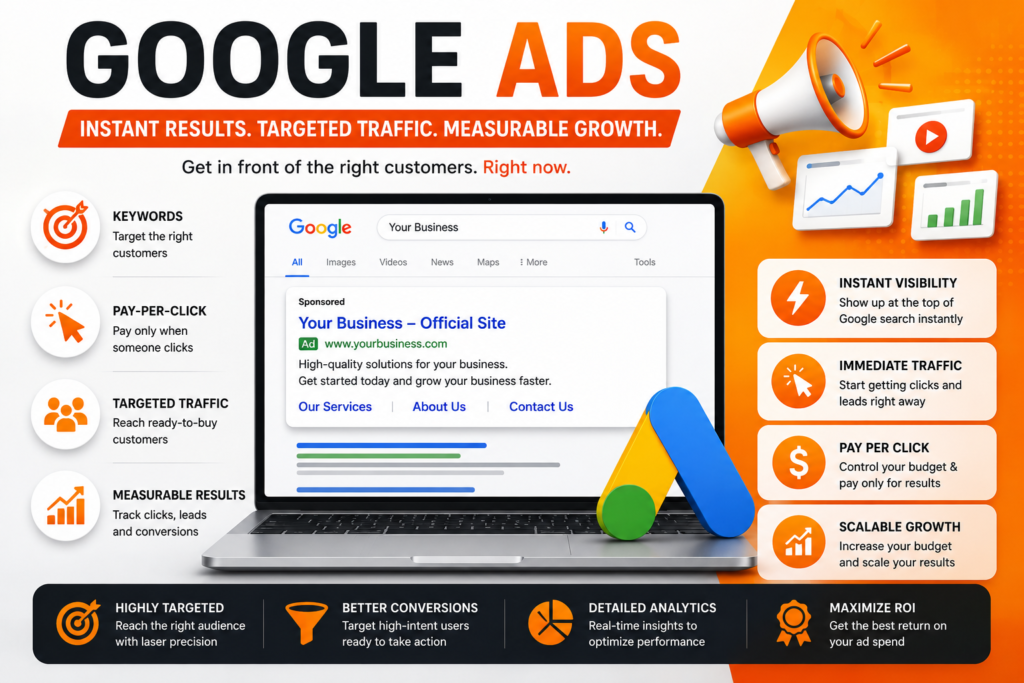
If you launch a new website today and need leads by next week, SEO probably won’t solve that problem. Search engine optimization takes time. Google needs to crawl your website, evaluate your content, understand your expertise, and compare your site against competitors before rankings improve.
Depending on your industry, it can take several months before significant SEO results become visible.
Google Ads changes that equation.
With a properly structured campaign, your business can appear at the top of Google search results within hours. Visitors can start arriving immediately. Leads can come in the same day.
For startups, new businesses, product launches, seasonal promotions, and businesses facing aggressive growth targets, this speed can be incredibly valuable.
Imagine opening a new dental clinic.
Waiting six months for local SEO rankings might not be practical if you need appointments now. Google Ads can help fill that gap by generating immediate visibility while your long-term marketing efforts gain traction.
This ability to create demand almost instantly is one of the biggest reasons businesses continue investing heavily in paid search advertising.
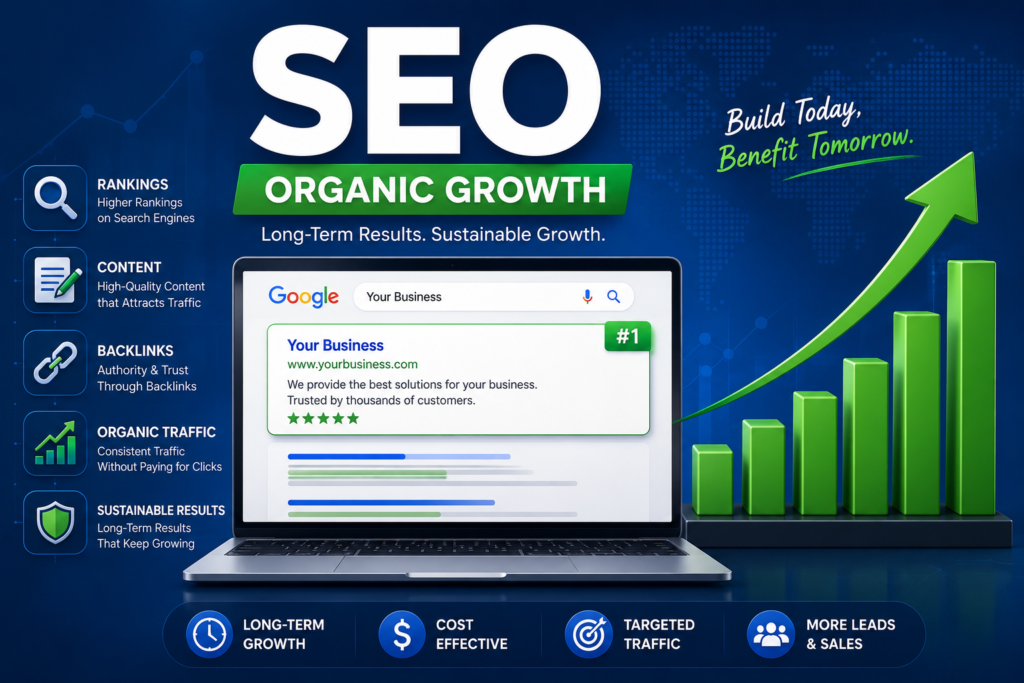
While Google Ads wins the speed battle, SEO shines when it comes to sustainability.
One of the most overlooked aspects of digital marketing is the compounding nature of organic search traffic.
When you invest in SEO, you’re creating assets that can continue generating traffic and leads long after the initial work is completed.
A well-written blog article can rank for years.
An optimized service page can consistently attract qualified prospects.
A strong website can generate thousands of visitors every month without requiring payment for each click.
This is why many experienced marketers view SEO as an investment rather than an expense.
Unlike paid advertising, where traffic disappears when the budget runs out, SEO can continue producing results month after month.
The businesses that dominate organic search results today often benefit from content and optimization efforts they began years ago.
Their traffic doesn’t depend entirely on daily advertising budgets. Instead, they’ve built a system that continuously attracts customers through search engines.
Over time, this often leads to lower customer acquisition costs and stronger overall return on investment.
One of the most common questions businesses ask is which strategy costs less.
The truth is that the answer isn’t straightforward.
Many people assume SEO is free because clicks from organic search don’t require direct payment. In reality, effective SEO requires significant investment.
You may need content writers, SEO specialists, technical optimizations, website improvements, keyword research tools, and link-building efforts.
These costs add up.
Google Ads, meanwhile, has obvious and measurable expenses. Every click has a price attached to it.
Depending on your industry, those costs can vary dramatically.
Keywords related to legal services, insurance, software, finance, and healthcare often command high advertising costs because of intense competition.
At first glance, Google Ads can appear more expensive.
However, SEO requires patience and ongoing investment before meaningful results emerge.
This is why comparing SEO and Google Ads solely on cost often leads to inaccurate conclusions.
A better question is this:
Which strategy will generate the highest return based on your business goals?
Sometimes that’s SEO.
Sometimes it’s Google Ads.
Often, it’s a combination of both.
## What Happens When You Stop Spending Money?
This question reveals one of the biggest differences between the two channels.
Imagine you’ve been running successful Google Ads campaigns for six months. Leads are coming in consistently and sales are strong.
Now imagine turning off your advertising budget tomorrow.
What happens?
In most cases, traffic drops almost immediately.
Lead generation slows.
Visibility disappears.
The flow of potential customers stops because the ads are no longer active.
Now consider a website that has invested heavily in SEO for the past year.
If they pause active SEO efforts for a short period, their rankings may eventually decline, but traffic doesn’t disappear overnight.
Existing content continues attracting visitors.
Previously earned rankings remain in place.
The website still benefits from authority and visibility built over time.
This is one of SEO’s greatest strengths.
It creates momentum.
Google Ads creates opportunities.
SEO creates assets.
Understanding this distinction is critical when planning long-term business growth.
Traffic is important, but lead quality matters even more.
Ten qualified leads are usually worth more than one hundred unqualified visitors.
Google Ads often excels at capturing users with strong purchase intent.
Someone searching for “emergency plumber near me” or “buy accounting software today” is often ready to take action.
Paid advertising allows businesses to target these high-intent searches with precision.
SEO, however, captures prospects throughout the entire customer journey.
A potential customer may discover your brand through an informational blog post, return later through another article, compare options using your content, and eventually convert into a paying customer.
This longer journey can actually strengthen customer relationships because prospects interact with your expertise before making a purchase decision.
The result is often higher trust and stronger brand recognition.
So which channel generates better leads?
The answer depends on your industry, audience, and sales process.
Google Ads frequently produces faster conversions.
SEO often produces deeper trust and stronger long-term relationships.
Both can be highly effective when executed properly.
One reason there is no universal answer to the SEO versus Google Ads debate is that every business operates differently.
A local emergency service provider may see exceptional results from Google Ads because customers need immediate assistance.
A law firm may benefit significantly from SEO because prospective clients spend time researching legal issues before making contact.
An e-commerce business often requires both.
Google Ads can generate immediate product sales through shopping campaigns and commercial-intent searches. SEO can drive long-term traffic through category pages, product guides, reviews, and informational content.
Startups frequently rely on Google Ads during their early stages because they need quick validation and immediate customer acquisition.
As they grow, SEO becomes increasingly valuable because it reduces dependency on paid advertising.
The best strategy is rarely determined by industry alone.
It depends on where your business is today and where you want it to be tomorrow.
Many businesses approach digital marketing as if they’re forced to choose between SEO and Google Ads.
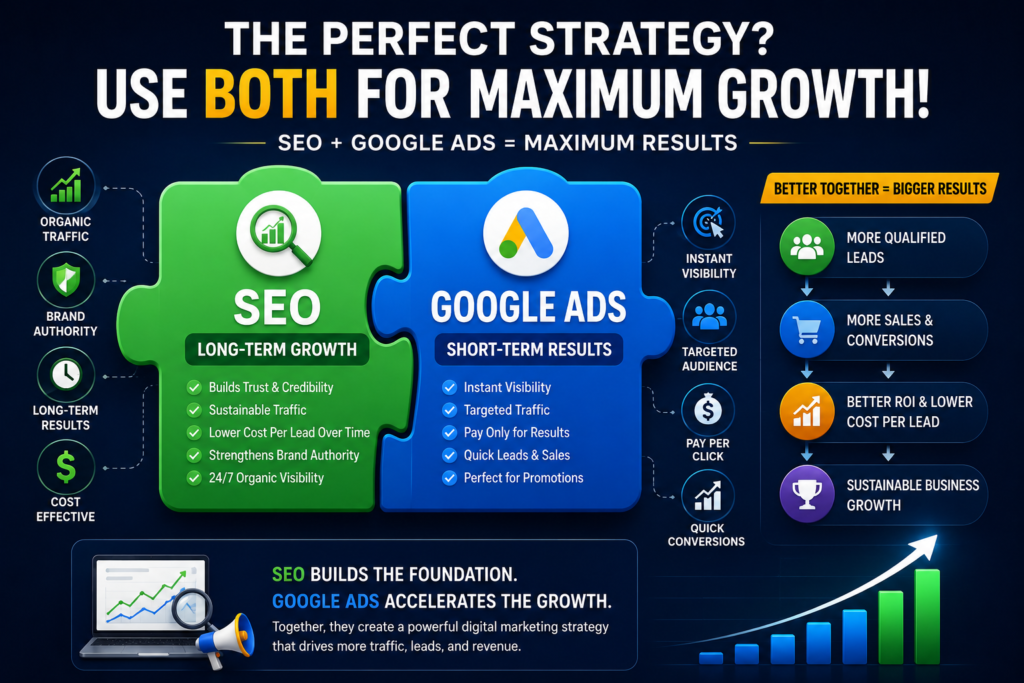
In reality, the strongest growth strategies often combine both.
Google Ads provides immediate visibility.
SEO builds long-term authority.
Google Ads generates valuable keyword and conversion data.
SEO turns that data into sustainable organic traffic.
Google Ads helps capture demand today.
SEO helps create demand over time.
Together, they form a marketing ecosystem that is stronger than either channel alone.
This is why many successful companies allocate budget to both strategies.
They understand that relying entirely on paid advertising can become expensive, while relying exclusively on SEO can slow growth.
Combining the two creates balance.
It allows businesses to generate immediate results while building long-term assets.
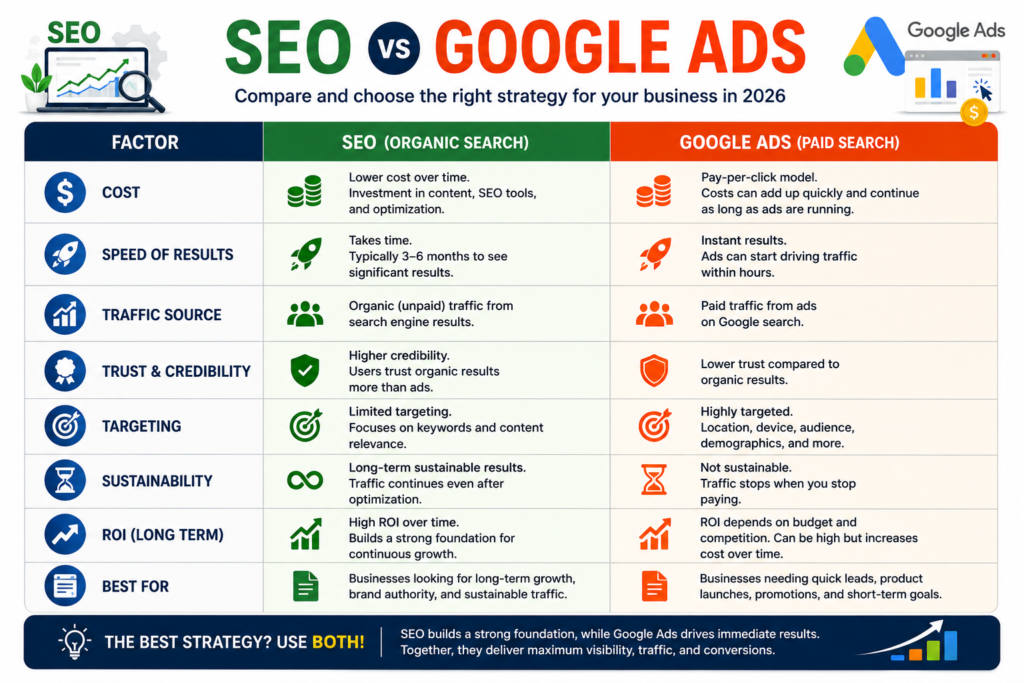
If your business needs leads quickly, Google Ads is often the fastest path to visibility.
If you’re launching a new service, entering a competitive market, running a seasonal campaign, or looking for immediate customer acquisition, paid advertising can deliver rapid results.
If your goal is sustainable growth, lower acquisition costs over time, stronger brand authority, and long-term search visibility, SEO deserves serious investment.
But for most businesses, the real answer isn’t SEO or Google Ads.
It’s SEO and Google Ads.
The businesses achieving the strongest growth in 2026 aren’t treating these channels as competitors. They’re using each one strategically.
Google Ads helps them capture opportunities now.
SEO helps them build a foundation for the future.
Together, they create a powerful system for attracting customers, generating leads, and increasing revenue.
In a digital world where attention is becoming more expensive and competition is growing every year, relying on a single channel can be risky.
The smartest approach is to understand the strengths of both.
Use Google Ads when speed matters.
Invest in SEO when sustainability matters.
And whenever possible, build a strategy that allows both channels to work together.
Because while paid advertising can help you win today’s customers, SEO can help ensure that customers continue finding your business tomorrow, next month, and years from now.
Yes, SEO remains one of the most cost-effective digital marketing strategies in 2026. While AI-powered search results are changing how users find information, businesses that invest in high-quality content, technical SEO, and user experience can still generate consistent organic traffic and leads.
SEO and Google Ads serve different purposes. SEO provides long-term organic traffic and better ROI over time, while Google Ads delivers immediate visibility and faster lead generation. Most successful businesses use both strategies together.
SEO will likely evolve beyond traditional keyword optimization and focus heavily on user experience, AI-driven search, voice search, and entity-based rankings. Brands that build authority and trust will continue to dominate search results.
Google Ads can start driving traffic as soon as campaigns are launched. SEO usually takes several months to achieve strong rankings and consistent organic traffic.
Yes. Running both strategies together can maximize visibility in search results, increase brand awareness, and improve lead generation.